Saturday 6th November 2010 Alhamdulillah, we completed the kitab Wishahul Afrah wa Isbahul Falah on 30th October. Last Saturday we opened a new kitab – on hadith. Dependent on Allah's will, Ustaz Zakaria shall hold this lesson every Saturday at 10 am. Every one – men, women, children are welcome, and the lesson is free. Translated from Mestika Hadis published by The Division of Islamic Affairs, Prime Minister's Department, 1973. It refers to what has reached us regarding sayings and actions of the Prophet Muhammad sallallahu alaihi wasallam, and his taqrir (silence) on certain actions of his companions when he became aware about them. This hadith (pl. ahadith) also refers to the physical descriptions and excellent personality of the Pophet sallallahu alaihi wasallam. It refers to the words of Allah, as narrated by the Prophet sallallahu alaihi wasallam, described in the Prophet's own words. It is different from al-Quran al-Karim, the Kalam of Allah Ta'ala, which arrangement and pronunciation revealed upon the Prophet sallallahu alaihi wasallam. The Prophet sallallahu alaihi wasallam then was ordered to spread it to all mankind. The era of the companions and the time hadith being collected and recorded in books spanned many generations. Therefore each hadith carries an isnad. An isnad (pl. sanad) is a silsilah (chain of narrations) consisted of narrators listed one by one. The isnad begins with the name of one's shaykh (teacher) and ends with the name of the companion receiving the hadith directly from Rasulullah sallallahu alaihi wasallam. Upon inspection of the isnad and the characters of the narrator (rawi), a hadith can further be classified into many categories. Some ahadith are popularly narrated by many rawi in each level of the isnad, so popular it is impossible that all of them would conceive a plot to make up the hadith. These ahadith are known as "Hadith Mutawatir". The status of these ahadith are strong and they become proofs to Islamic ruling. It is not permissible to reject or deny these ahadith. Some other ahadith do not reach the level of Mutawatir due to the lesser number of narrators. They are divided into 3 categories: Sahih, Hasan, and Dho'if. A hadith that satisfies 5 prerequisites is called a sahih (authentic) hadith: Hadith Hasan (sound) passes the 5 Sahih qualifications above,. However the level of 'adl and dhobit of its narrators are of slightly lower standard. A dho'if (weak) hadith is a hadith failing any of the 5 qualifications stated. Sahih or Hasan ahadith are among the founding platform of Islamic Syari'ah; they are for daily practice and used as proofs to establish a ruling. Dho'if ahadith are not valid as legal proofs, but can be used to show merit of good deeds, thus encouraging the good; and to create fear of evil deeds and discourage the bad. A decision whether a hadith is Sahih, Hasan, or Dho'if is based on the superficial characteristics of the rawi and isnad. The decision could never be final, because there is always a chance of error on judging a rawi's trustworthiness; not to mention that even a liar sometimes speak the truth. We leave the absolute judgment to Allah. Ustaz Zakaria said: Wallahu a'lamDefinition of Hadith Nabawi and Hadith Qudsi
Hadith Nabawi
Hadith Qudsi
Every hadith has its isnad
Hadith Mutawatir
Hadith Sahih, Hasan, and Dho'if
Hadith Sahih
Hadith Hasan
Hadith Dho'if
Place of Ahadith
Identifying category of Hadith
Monday, November 8, 2010
A Brief Intro to the Science of Hadith


Saturday, March 28, 2009
Salawaat in Rabi'ul Awwal
Don't you find it strange that some people (loudly claiming they are "purer" Muslims) look for excuses to not celebrate the prophet (saw) and critize fellow muslims who do celebrate? Get real! All Muslims should to celebrate Prophet Muhammad (saw), as had been done by the salaf and khalaf generations before us.
Part of Burdah of Imam Muhammad bin Said al-Busiri
As long as you do not follow the way of the Christians
- who overly praise Jesus alaihissalam and turn him into god)-
Praise him (Muhammad) the way you please(verse 43)
Salawat Khusus of Tariqah Ahmadiah
O Allah, send salutation, peace and blessings upon our master Muhammad and his family in every glance and breath, the count of which only known to Allah, whose Knowledge has no limit.
Part of Salawat ‘Azimiah of Sidi Ahmad bin Idris (rh)
I plea to Allah - by the Light of Allah the Magnificent, the Light that fills up the Pillars of the ‘Arash of Allah the Magnificent, with which the worlds come into being – that He send great salutation upon our master Muhammad. And great salutation upon the family of Nabi, a salutation fitting to the greatness of Allah......(until the end)
Salawat of Imam as-Shafi’i (rh) as found in Dala’il al-Khairat and elsewhere
O Allah, send salutation and peace upon Sayyidina Muhammad, every time those who remember (az-zakirun) make remembrance (zakara) of You.
O Allah, send salutation and peace upon Sayyidina Muhammad, every time those who neglect (al-ghafilun) fail to make remembrance of you.
Part of the Ten Salawaat as given by a student of Madrasah Saulatiyyah, Makkah
O Allah, send salutation and peace upon Sayyidina Muhammad, who walks under the sun and he has no shadow following him.
O Allah, send salutation and peace upon Sayyidina Muhammad, (so noble he is) that flies never set down on his person...(until the end)
Part of Dala'il al-Khairat as read on Saturdays
And may You (Allah) send salutation upon him (Muhammad) and his family. Send salutations as many times as the number of the creations - who glorify You, and who claim Holiness unto You, and who prostrate to You - since the the day you created this world up to the Day of Resurrection, and for each day you amplify 1000 fold...(until the end)
Salawat Shifa/Tibbiah
O Allah, send salutation upon Sayyidina Muhammad, the kind that cleanses the heart and becomes its healer, that remedies ailment and becomes health restorer, that lights up vision and becomes the illuminator.
Salawat Tafrijiyah
O Allah, send complete salutation and send perfect peace upon Sayyidina Muhammad, with whom ceases all that binds, and ends all sadness, and fulfills all wishes, and attains all desires, and ends with goodness, and causes the pouring of rain, by his generous countenance, and upon his family and his companions, as much as glance of an eye and every breath that is made that is in Your Knowledge.
Salawat Munjiyat
O Allah, send salutation upon Sayyidina Muhammad, with which You release us from catastrophe and misfortune, and You fulfill all wishes, and You clear all our wrongdoings, and You elevate our rank by Your side, and You suffice us with kindness during our lifetime and after it, and please send our salutation as well to Muhammad’s family and his companions.
Some translations I took from these sites, thanks to the owners:
http://superdervish.blogspot.com/2006/05/salawat-nariyyahtafrijiyyah.html
http://al4mien.wordpress.com/category/dienul-islam/page/2/
http://www.deenislam.co.uk/dalail.htm
http://bewley.virtualave.net/dalail1.html
Wallahu a'lam
Tuesday, March 24, 2009
Hadith On Love
This is the second hadith musalsal I got ijazah from Ustaz Fahmi Zamzam al-Banjari an-Nadwi al-Malikito practise. The first hadith already been posted in November 2008. I regret not being able to post exactly as written in the kitab, but I have to save space :(
This hadith al-Musalsal bil-Mahabbah can be recited as part of after-solah wirid.
Ustaz Fahmi Zamzam said:It has been narrated by our shaykh the knowledge of al-Hijaz, the fragrance of the land of al-Haram as-Sayyid Muhammad bin ‘Alawi al-Maaliki al-Hasani (rh) – he has said: It has been narrated to us by many shaykhs, among them:
My father as-Sayyid ‘Alawi bin ‘Abbas al-Maliki, as-Shaykh Hasan bin Sa’id Yamani, as-Shaykh Hasan bin Muhammad al-Mashath, as-Shaykh Muhammad Nur Sayf, as-Shaykh Muhammad Yasin al-Fadani, as-Shaykh Ibrahim al-Khattani al-Bukhari al-Madani, as-Shaykh Muhammad al-Hafiz at-Tijani, as-Shaykh Soleh bin Muhammad al-Ja’fari, as-Sayyid ‘Abdul ‘Aziz bin as-Siddiq al-Ghumari, al-Habib Salim bin Jindan aali Shaykh abu Bakar bin Salim, al-Habib Shaykh bin Salim al-‘Attas, al-Habib ‘Umar bin Ahmad bin Sumait,
and many others that I have mentioned in a separate document.
As-Sayyid Muhammad bin ‘Alawi further said: I mention here the chain (common to) of my father, al-Mashath, and al-Fadani.
Each of them has said to me:
في دبر كل صلاة
Truly I have love for you all, so after each solah say: " O Allah I plea that You make me always remember You, grateful to You, and be of good service to You".
Each of the 3 shaykhs had been narrated the same way by Shaykh ‘Umar Hamdan.
And Shaykh ‘Umar Hamdan himself had been narrated the same way by Shaykh Falih az-Zohiri and Sayyid Muhammad ‘Ali al-Watiri. Shaykh Falih had been narrated similarly by as-Sharif Muhammad bin ‘Ali as-Sanusi, who had received from al-Jamal ‘Abdul Hafiz al-‘Ajimi, from Muhammad Hashim bin ‘Abdul Ghafur, from ‘Id bin ‘Ali an-Namrisi al-Barlisi, from al-Mu’ammar Muhammad al-Bahwati al-Hanbali, from ‘Abdul Rahman al-Bahwati, from Najmuddin al-Ghiiti, from al-Hafiz Jalaluddin as-Suyuti.
As-Suyuti from Abu at-Toyyib Ahmad bin Muhammad al-Hijazi, from the judge of all judges (Qadhi al Qudaat) Majduddin Isma’il bin Ibrahim al-Hanafi, from al-Hafiz Abu Sa’id al-‘Ala’I from Ahmad bin Muhammad al-Armu’I from ‘Abdul Rahman bin Makki from Abu at-Tohir as-Salafi, from Muhammad bin ‘Abdul Karim, from Abu ‘Ali ‘Isa bin Shazan al-Qasar al Basri, from Ahmad bin Sulaiman an-Najad, from Abu Bakar bin Abi ad-Dunya, from al-Hasan bin ‘Abdul ‘Aziz al-Jarwi, from al-Hakam bin ‘Abdah, from Haiwah bin Shuraih, from ‘Uqbah bin Muslim, from Abu ‘Abdul Rahman al-Habli, from as-Sonabihi:
From Mu’az bin Jabal (ra), Rasulullah (saw) had said:
اَللهُمَّ أَعِنِّي عَلَى ذِكْرِكَ وَشُكْرِكَ وَحُسْنِ عِبَادَتِكَ
O Mu’az, truly I have love for you, therefore you should say: "O Allah I plea that You make me always remember You, grateful to You, and be of good service to You.”
Abi Daud has a slightly different narration, but to the same effect.
And Ustaz Ahmad Fahmi Zamzam al-Banjari an-Nadwi al-Maliki said: My shaykhs: Musnid ad-Dunya as-Shaykh Muhammad Yasin bin ‘Isa al-Fadani al-Makki and the fragrance of the land of al-Haram as-Sayyid Muhammad bin ‘Alawi al-Maliki al-Hasani have said:
Said Imam as-Suyuti: both isnad and tasalsul are sahih. Said as-Shaykh Muhammad ‘Abid: all matan, tasalsul, and isnad are sahih.
Comments by Ustaz Fahmi Zamzam:
- I had the opportunity to study under Shaykh Yasin Fadani for a few months before he passed away. He had lived to a very old age.
- Shaykh Soleh bin Muhammad al-Ja’fari – tariqah Ahmadiah Idrisiah Ja’fariah named after him.
- Ustaz Fahmi received tariqah Ahmadiah Idrisiah from Sayyid Muhammad bin ‘Alawi from the latter's father from Sanusi as-Saghir from Sanusi al-Kabir from Sidi Ahmad bin Idris.
- Sanad is important. If not for sanad, anybody could have freely said this and that.
- Haiwah bin Shuraih - a personal confidant of Khalifah Sulaiman bin 'Abdul Malik.
Wallahu a'lam
Friday, March 20, 2009
2 charms of Langkawi


The gentleman did not admit it, but I am under impression that he has memorized most – if not all - of the ahadith in the 6 major hadith books (Kutub as-Sittah). A graduate of Darul Uloom Deoband in India, he related a curious story on how in the early days, the upper floor section of the Darul Hadith building was reserved to jinn-students only. I mean, humans studied downstairs, and jinns upstairs. Now the jinn section is open to human, and people study Quranic tafseer there.
 Darul Uluoom Deoband is world-famous for hadith studies. Many ulama graduated from this madrasah.
I have great respect for this young brother for his ability, humbleness, and respect to Islam and the Prophet (saw). He is the imam of masjid, Hanafi by mazhab, yet paused after the 2nd ruku’ in Subuh solah to recite dua qunut in respect of Shafi’i followers behind him. He is of Chishti tariqah, and makes a habit of walking about town reciting Allah’s name at least 6000 times a day. He recites al-Quran several juzu everyday so that he can khatam all 30 juzu in 8 days. He very recently – from 10pm until 5am - debated a deviant visitor from Penang (of Qadiani sect) on legitimacy of Prophet Muhammad (saw) being the final messenger (khatam nubuwwah).
Reflecting on this I wonder how some of us only after reading a few quotes of ahadith, get big-headed and start to attack authority of established ulama. Really these misguided ones have been beguiled by ignorance and nafs-ammarah. How dare they say that we – the followers of mazhab – blindly follow the past ulama, instead of follow the sayings of the Prophet? Do they think none of us study hadith? Get real! I have met a few hadith masters, ALL of them follow one mazhab or another.
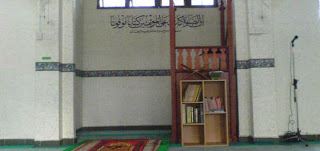 If you happen to be in Langkawi, look for Imam Mohammed Khaled of Masjid India (Riadhul ‘Abidin) in Kuah town. Make a visit to this man, maybe there is something good Allah will bestow you. Langkawi at least has charmed me twice: the beauty of the beaches and the encounter with a hadith master. Alhamdulillah.
Kutub as-Sittah: The six famous hadith books comprising of Sahih Bukhari, Sahih Muslim, the Sunans of an-Nasa’i, Abu Dawud, Tirmidzi, and Ibn Majah.
The brother mentioned they also studied Muwatta’ of Imam Malik and Muwatta’ Imam Muhammad in Darul Uloom.
Wallahu a'lam
Tuesday, March 17, 2009
Habib Umar's Advise
Tariqah Sufiyyah
(After the customary hamdalah and salawat to Rasulullah s.a.w)
Allah had destined us to gather here today. He had our names written in His Attendance List even before we got here. There are people out there who are unmindful of the maulud. But think not you are superior over them. Keep yourself low - this is the manners of Islam.
There are no man-made laws that you can compare with laws brought to us by the prophets. Recommendations made by men cannot solve problems that we do not see.
Moses (as) was sent to the Pharaoh to correct his ways. Remember that Pharaoh at that time was strong, and had solid hold over his sovereignty. Moses asked him: “don’t you need to cleanse your heart?” There’s something we can learn from this story.
In surah TaHa, Allah said: “go to Pharaoh, indeed he has transgressed”. But Allah ordered Moses to go with courtesy, not with military force.
The people of tasawwuf –the Sufis – take care to preserve good manners (akhlaq) as shown by Moses. Said Junaid al-Baghdadi (rh): “Akhlaq is tasawwuf. Increase in akhlaq means increase in tasawwuf”. Nothing weighs the mizan heavier than akhlaq. Only those with akhlaq can come near to Rasulullah (saw).
Among the characteristics of sufis are tawaddhu’ and ikhlas. Tawaddhu’ is humility, where you do not want to stand out among those around you. Hasan Basri (rh) said he would never backbite because he cannot stand giving away his own rewards (to those he backbites).
A man from the Israelites worshipped Allah relentlessly for 60 years. He supplicated for some favor but Allah rejected. He criticized himself “if only you had worshipped more, surely Allah would have fulfilled your supplication”. Allah sent a prophet to this man saying “The moment you criticized yourself, Allah values more, than the whole 60 years of your worship. Now supplicate to Allah and ask whatever you want”.
Ikhlas is sincerity. Saidina ‘Ali (ra) brought down an enemy in combat, but stopped short of killing him, being afraid his killing due more to personal revenge than to divine causes. On our part, we should be afraid to commit sin, as much as we are afraid of being thrown into the hellfire.
We are living in an era of fitnah, therefore stay away from useless debates. Remind ourselves that we are being tried with prevalent pseudo-da’wah, breakup of ummah, and digression from sunnah.
Part of a hadith qudsi: “How many of Allah’s servants who take sins lightly, yet those small sins are the cause for him to get su’ul khatimah”.
Wallahu a'lam
Sunday, March 8, 2009
Maulud of Prophet Muhammad (saw)

We celebrate his birthday today, on 12th of Rabi'ul 'Awwal.
He is the ultimate example for mankind, no doubt.
There is no denying our love for him.
Such a deep love for this noble person is the reason
that we look for every excuse to celebrate him.
We celebrate his birth by reciting more salawat, or recite specific poems such as the Qasidah Burdah of Imam Muhammad bin Sa'id al-Bushiri. The imam said:
How could I hide my love
if that love is manifested in my
tears and suffering
(verse 6)
As long as you do not follow the way of the Christians
(who overly praise Jesus alaihissalam and turn him into god)
praise him (Muhammad) the way you please
(verse 43)
Let me utter the virtues of Muhammad
and make them shine like a beacon
on a hill, greeting the arriving wayfarers
Pearls, beautiful they are stringed together
still they radiate beauty scattered and unpolished
(verse 88-89)
O Allah pour mercy upon Sayyidina Muhammad and upon the family of Muhammad,
just like you have poured mercy upon Sayyidina Ibrahim and upon the family of Ibrahim. For all the worlds, really You are the Most Praiseworthy and the Most Honorable.
Wallahu a'lam
Monday, March 2, 2009
Dala'il al-Khayrat - Ibn Sulaiman al-Jazuli

Baba Aziz got his ijazah from two shaykhs:
1. Shaykh Soleh bin Awang Besar al-Kelantani from Shaykh 'Alawi al-Maliki.
2. Shaykh Idris al-Fatoni from Shaykh Bukhari al-Madani.
Words of wisdom from Baba 'Abdul Aziz the night before:
Hadith: Rasululah (saw) has said:
Truly I have been sent to make the noble manners perfect.
Education in Islam leans more towards tarbiyyah - nurturing oneself towards good behavior. This is achieved under supervision of a murabbi or a murshid, a concept alien to many modern Islamic schools and universities. Believe me, education tailored towards worldly benefits will never achieve the goal Islam has set for all of us.
Learning tasawwuf is like looking into a mirror that has that refelective coating behind. You see your own self.
Learning fiqh, on the other hand, is like looking into a mirror without that same coating. All you see is other people around you.
Students of tasawwuf correct thier own shortcomings. Students of fiqh busy themselves trying to correct others.
Subahanallah, how true.
Wallahu a'lam
Thursday, November 6, 2008
Hadith on Mercy
It'd been quite an adventure driving around past maghrib looking for the place, with my good friend on the phone guiding which landmark to look out for and so on.
This place is actually a semi-detached house bought by a generous brother (I heard for quite a sum!) and turned into sort of a zawiyah. The living room complete with women's section, air-conditioner and excellent sound system acts as the lecture hall. There are bedrooms upstairs that visiting shaykhs can use for the duration of their stay. no doubt this brother is the kind of muslim that we all should be envious with. May Allah return His favor to him, and may He send us more muslims as generous.
Fitting to the occasion, I got ijazah to practice the very first hadith (Musalsal Awwaliyyah Haqiqiyyah ) plus 2 more musalsalat ahadith from the shaykh. In full respect of the "musalsal" spirit, I write here exactly as narrated to me.
Hadith ar-Rahmah al-Musalsal bil-Awwaliyyah as narrated to us by Ustaz Fahmi Zamzam:
I, a poor servant striving for mercy of Allah The Most Powerful, Ahmad Fahmi Zamzam al-Banjari (named) by birth, and an-Nadwi by scholarship, and al-Maliki by tribute;
It has been narrated by our shaykh the knowledge of al-Hijaz, the fragrance of the land of al-Haram as-Sayyid Muhammad bin ‘Alawi al-Maaliki al-Hasani (rh) in the very first hadith, and he said: It has been narrated to us in Musalsal Awwaliyyah Haqiqiyyah from the shaykh of our shaykhs (al-Mu’ammar as-Syarif ‘Abdul Kabir bin Muhammad al-Mahi bin Ibrahim as-Saqali al-Husaini) at Masjid Nabawi as-Syarif in year 1380 A.H, and this is the very first hadith we heard from him. And he said: It has been narrated by (as-Sayyid ‘Ali bin Zohir al-Watari al-Madani), he said (Ahmad Minnatullahi al-Azhari) told us in 1287 AH and this is the first hadith I heard from him, he said ('Abdul Rahman bin Muhammad bin ‘Abdul Rahman al-Kuzburi ad-Dimashqi) told us, and this is the first hadith I heard from him, he said (Badruddin Muhammad as-Shahir bi-Ibn Budair al-Maqdisi) told us and this is the first hadith I heard from him, he said:
(Abu an-Nasr Mustafa ad-Dimyati) told us and this is the first hadith I heard from him, he said (Muhammad bin Ahmad bin Sa’id As-Shahir bi-Ibn ‘Aqilah) Sohibul-Musalsalaat told us and this is the first hadith I heard from him, he said (as-Shaykh Ahmad bin Muhammad ad-Dimyati al-Mashhur Bi-Ibn ‘Abdul Ghani) told us in a gathering of people of knowledge, and this is the first hadith I heard from him, he said (al-Mu’ammar Muhammad bin ‘Abdul ‘Aziz al-Manufi) told us and this is the first hadith I heard from him and he gave ijazah to me together with all his narrations, he said (as-Shaykh al-Mu’ammar Abu al-Khair bin ‘Ammus asr-Rashidi) told us and this is the first hadith I heard from him and he gave ijazah to me together with all his narrations in Rabi’ul Awwal 1002 (AH), he said Shaykhul Islam as-Sharif Zakaria bin Muhammad al-Ansori told us and this is the first hadith I heard from him, he said:
The Seal of all Huffaz ash-Shihab Abu al-Fadil Ahmad bin ‘Ali bin Hajar al-‘Asqalani told us and this is the first hadith I heard from him, he said (al-Hafiz Zainuddin Abu al-Fadil ‘Abdul Rahimbin al-Husain al-‘Iraqi) informed us with it and this is the first hadith I heard from him, he said (as-Sadr Abu al-Fatah Muhammad bin Muhammad bin Ibrahim al-Maidumi) told us and this is the first hadith I heard from him, he said (an-Najib Abu al-Faraj ‘Abdul Latif bin ‘Abdul Mun’im al-Harrani) told us and this is the first hadith I heard from him, he said (Al-Hafiz Abu al-Faraj ’Abdul Rahman bin ‘Ali al-Jauzi) informed us with it and this is the first hadith I heard from him, he said (Abu Sa’id Isma’il bin Abu Soleh an-Naisaburi) told us and this is the first hadith I heard from him, he said my father (Abu Soleh Ahmad bin ‘Abdul Malik al-Mu’zin) told us and this is the first hadith I heard from him, he said (Abu Tohir Muhammad bin Muhammad bin Mahmish az-Ziadi) told us and this is the first hadith I heard from him, he said (Abu Hamid Ahmad bin Muhammad bin Yahya bin Bilal al-Bazzar) told us and this is the first hadith I heard from him, he said (‘Abdul Rahman bin Bishr bin al-Hakim an-Naisaburi) told us and this is the first hadith I heard from him, he said:
Sufyan bin ‘Uyainah told us and this is the first hadith I heard from him, he said from ‘Amru bin Dinar, from Abi Qabus (the freed slave of ‘Abdullah bin ‘Amru bin al-‘As), from ‘Abdullah bin ‘Amru bin al-‘As (ra),
that Rasulullah (saw) said:
الراحمون يرحمهم الرحمن تبارك وتعالى، إرحمو من في الارض، يرحمكم من في السماء.
The Most Benificient (Allah) in His high Glory pour mercy upon those who love each other. So have mercy among those on earth, those in the heaven (angels) will have mercy upon you.
As-Sakhawi said this hadith has been quoted by al-Bukhari in his book "Kunya", Al-Humaidi and Ahmad in their "Musnid", al-Baihaqi in "Branches of Iman". Abu Daud mentioned it in his Sunan, and Tirmizi said in his Jami’:"hasan sahih". The hadith also quoted by al-Hakim in his Mustadrak as sahih.
This hadith is musalsal up to Sufyan bin ‘Uyainah.
Comments by Ustaz Fahmi Zamzam:
- Hadith Musalsal bin-Awwaliyyah Haqiqiyyah literally means "the true first hadith". The first time you meet any hadith master, request from him "awwaliyyah haqiqiyyah", then he would know that you are a student with manners. Most likely he would narrate you this first hadith.
- This hadith narrated to Ustaz Fahmi Zamzam by Sayyid Muhammad bin Alawi al-Maliki al-Hasani in 1408 AH.
- The second shaykh in the chain: Ibrahim as-Saqali – Ibrahim from island of Sicily. The ancient Jauhar as-Saqali was a general who built al-Azhar university in 358 AH.
- The 4th shaykh in chain: Al-Kuzburi – of a Kurdish tribe. Shaykh Ramadan al-Buti, Salehuddin al-Ayyubi also Kurdish. Many of them Shafi’i in mazhab and either Naqshabandi or Qadiri in tariqah.
- Al-Mu’ammar – somebody who lived to very old age.
- Zainuddin ‘Abdul Rahim bin al-Husain al-‘Iraqi – the famous master who made takhrij on ahadith presented by Imam Ghazali in Ihya ‘Ulumiddin .
- Fathul Bari by Imam Ibn Hajar al-‘Asqalani is by ulama' consensus the best ever commentary on Sahih Bukhari.
- Al-Hafiz are the masters who memorize at least 100,000 ahadith (matan + sanad).
Tuesday, August 5, 2008
Hadith #89-91, Abdullah Ibn Umar 17/5/08
Hadith lesson by Sheikh Mohd Nuruddin Marbu Al-Banjari Al-Makki at Masjid USJ9 Subang Jaya on 17/5/08 (Ahadith #89-91)
Compilation of Hadith as Narrated by 10 of the Sahabahs.
Narration of Sayyidina Abdullah ibn Umar (ra) (continued).
Hadith #89: Be Clothed At All Times.
عن إبن عمر - رضي الله عنهما - أن رسول الله (ص) قال: إياكم والتعرى، فإن معكم من لايفارقكم إلا عند الغاءط، وحين يفضِى الرجل إلى أهله، فاستحيوهم وأكرموهم.
(رواه الترمذي)
From Ibn Umar (ra):
Rasulullah (saw) said: Prevent from being unclothed (naked). Indeed angels are always with you except when you are at the toilet and when a man is in bed with his wife. So be shy with them and show respect to them.
(as narrated by Imam at-Tirmidzi rh).
Explained Sh. Nuruddin:
- It is not haram to take shower unclothed, but disliked (makruh).
- Angels (malaaikah) are always around us. There are special angels present during sessions in which we make remembrance of Allah (majlis zikir).
Hadith #90: Supplicate For Good Health .
عن إبن عمر - رضي الله عنهما - قال: قال رسول الله (ص): من فتح له منكم باب الدعاء، فتحت له أبواب الرحمة، وما سإِل الله شيأً يعطى أحب إليه من أن يسأل العافية.
وفي رواية: قال رسول الله (ص): إن لدعاء ينفع مما نزل ومما لم ينزل، فعليكم عبادالله بالدعاء
(رواه الترمذي)
Rasulullah (saw) said: Whoever is opened the door (opportunity) to do supplication (do’a), that means he is opened the doors of mercy. There is no request that Allah loves to fulfil more than a request for good health.
And in another narration:
Rasulullah (saw) said: Truly a do’a is always beneficial regardless it is fulfilled or not. Therefore o servants of Allah! Supplicate!
(as narrated by Imam at-Tirmidzi rh).
Explained Sh. Nuruddin:
- When you are moved to do do’a, that means Allah has blessed you with mercy.
- Supplicate for health = Ask protection from disease and disobedience.
- Money in the hands of good people will be put to good use. Only one person paid for all the expenses when Habib Umar came to South East Asia.
- Imam Abdullah at-Tustari once did supplication with one hand only, the other hand was in his pocket because of cold weather. He then heard a voice: “O Abdullah, we have forgiven the sins of that hand which is in your pocket”. From then on, Imam Abdullah always made sure he raise both hands when supplicating.
Hadith #91: Repent!
عن إبن عمر - رضي الله عنهما - قال: قال رسول الله (ص): توبوا إلى ربكم، فإني أتوب إليه في اليوم مأة مرة
وعن إبن عمر - رضي الله عنهما - عن النبي (ص) قال: إن الله يقبل توبة العبد مالم يغَرغِر
(رواه أحمد والترمذي و عبد بن حميد)
Rasulullah (saw) said: Repent to your God. Really, everyday I repent to Him 100 times.
And again From Ibn Umar (ra):
Rasulullah (saw) said: It is a fact that Allah would accept repentance of His servant as long as he has not breathed his last.
(as narrated by Imams Ahmad, at-Tirmidzi, and Abdu bin Humaid rh).
~~~~~~~~~~~~~~~~~~~~~~~~~~~~~~~~~~~~~~~~~~~~~~~~~~~~~~~~~~~~~~~~~~
Wallahu a'lam
Thursday, June 26, 2008
Hadith #86-88, Abdullah Ibn Umar 17/5/08
Hadith lesson by Sheikh Mohd Nuruddin Marbu Al-Banjari Al-Makki at Masjid USJ9 Subang Jaya on 17/5/08 (Ahadith #86-88)
Compilation of Hadith as Narrated by 10 of the Sahabahs.
Narration of Sayyidina Abdullah ibn Umar (ra) (continued).
Hadith#86: Status of a Faithful Muslim.
عن إبن عمر - رضي الله عنهما - قال: رأيت رسول الله (ص) يطوف بالكعبة ويقول: ما أطيبك وأطيب ريحك ما أعظمك وأعظم حرمتك والذي نفس محمد بيده لحرمة المؤمن أعظم عند الله حرمةً منك: ماله ودمه وأن تظُنَّ به إلا خيرا
(رواه إبن ماجه)
From Ibn Umar (ra): I saw Rasulullah (saw) circling (tawaf ) the Ka’bah, and he said (to the Ka’bah):
Such fragrance you emit! Such greatness you have! So high your status! But by Allah that holds control over Muhammad, Allah put higher regard to a believer (faithful muslim) than to you. He also put high regard on the believer’s property and his blood. So refrain from holding suspicion against another believer.
(as narrated by Imam Ibn Majah rh).
~~~~~~~~~~~~~~~~~~~~~~~~~~~~~~~~~~~~~~~~~~~~~~~~~~~~~~~~~~~~~~~~~~
Hadith#87: Socializing with People.
عن إبن عمر - رضي الله عنهما - قال: قال رسول الله (ص): المؤمن الذي يُخالط الناس، ويصبر على أذاهم أعظم أجرًا من المؤمن الذي لا يُخالط الناس، ولا يصبر على أذاهم
(رواه البخاري و أحمد والترمذي)
From Ibn Umar (ra):
Rasulullah (saw) has said: A believer who mixes with people, and have patience over their offensive behavior, is rewarded more than another believer who does not mix with people and could not tolerate their offense.
(as narrated by Imams Al-Bukhari, at-Tirmidzi rh).
Explained Sh. Nuruddin:
- Sometimes we benefit from people who are rude to us.
- Usually it is better to isolate oneself before doing zikr to prevent people intruding our communication with Allah.
- Whenever there is safety risk, it is better to get away from people.
~~~~~~~~~~~~~~~~~~~~~~~~~~~~~~~~~~~~~~~~~~~~~~~~~~~~~~~~~~~~~~~~~~
Hadith #88: Injustice is Darkness.
عن إبن عمر - رضي الله عنهما - قال: قال رسول الله (ص): أيها الناس، اتَّقو الظُّلم، فإنه ظلمات يوم القيامة
(رواه أحمد و عبد بن حميد)
From Ibn Umar (ra):
Rasulullah (saw) said: O people! Be afraid of being unjust, because.injustice (zalim) would show itself as darkness (zulumaat) at the Day of Rising.
(as narrated by Imams Ahmad and ‘Abdu bin Humaid rh).
Wallahu a'lam
Wednesday, May 21, 2008
Hadith #79-85, Abdullah Ibn Umar 17/5/08
Hadith lesson by Sheikh Mohd Nuruddin Marbu Al-Banjari Al-Makki at Masjid USJ9 Subang Jaya on 17/5/08
Compilation of Hadith as Narrated by 10 of the Sahabahs.
Narration of Sayyidina Abdullah ibn Umar (ra)
Hadith: Talk Well About the Deceased.
Hadith #79 Narration of Sayyidina Abdullah ibn Umar (ra)
عن إبن عمر رضي الله عنهما : أنَّ رسول الله (ص) قال : اذكروا محاسن موتاكم وكفُّوا عن مساويهم
(رواه أبو داود والترمذي)
From Ibn Umar (ra):
Truly Rasulullah (saw) said: Talk well about the deceased among you, and refrain from mentioning their flaws.
(as narrated by Imams Abu Daud and at-Tirmidzi rh).
Explained Sh. Nuruddin:
- Refrain from backbiting others. If there is harm to the deceased, it is even worse if directed to those who are alive!
- There is another hadith:” It is sinful (fasiq) to say bad things to other Muslim. It is unbelief (kufr) to show enmity towards another Muslim”.
- Principle of justice: We have to respect others just like we want them to respect us.
- Saidina Umar al-Khattab r.a. once was criticized by an old woman just after he finished delivering a sermon. She complained: “…You have no rights to set such a dowry on women…”and cited a contradicting hadith of the Prophet (saw). Umar admitted his error: “Really Umar has been confused, and the woman is right”.
~~~~~~~~~~~~~~~~~~~~~~~~~~~~~~~~~~~~~~~~~~~~~~~~~~~~~~~~~~~~~~~~~~
Hadith: Help the Needy.
Hadith #80 Narration of Sayyidina Abdullah ibn Umar (ra)
From Ibn Umar (ra), he said:
Rasulullah (saw) has said: He who would like his supplication to be answered, and his affliction to be lifted away, should help others in need.
(as narrated by Imams Ahmad and Abdu bin Humaid rh).
Explained Sh. Nuruddin:
Help can be offered in various ways including:
- Money and material.
- Supplication (do’a) and rememberance towards Allah (zikr).
- Good advise.
- Physical strength.
~~~~~~~~~~~~~~~~~~~~~~~~~~~~~~~~~~~~~~~~~~~~~~~~~~~~~~~~~~~~~~~~~~
Hadith: Revere Your Leaders.
Hadith #81 Narration of Sayyidina Abdullah ibn Umar (ra)
From Ibn Umar (ra), he said:
Rasulullah (saw) has said: When a leader is present among you, show reverence on him.
(as narrated by Imam Ibn Majah rh).
Explained Sh. Nuruddin:
Physically a leader looks no different than common folk. We set them out by showing some reverence.
~~~~~~~~~~~~~~~~~~~~~~~~~~~~~~~~~~~~~~~~~~~~~~~~~~~~~~~~~~~~~~~~~~
Hadith: Refrain From Being Alone.
Hadith #82 Narration of Sayyidina Abdullah ibn Umar (ra)
From Ibn Umar (ra):
Rasulullah (saw) has forbidden a man from being in a place alone or traveling alone.
(as narrated by Imam Ahmad rh).
Explained Sh. Nuruddin:
- Prohibition of living alone in an unsuitably large residence.
- Prohibition of traveling alone: In another hadith, Rasllullah (saw) has said that traveling singly is ‘satan’, in group of two is ‘satan’, and in group of three is (good) congregation.
- There is no problem with traveling singly in a large transport that accommodate many people (e.g plane, bus).
~~~~~~~~~~~~~~~~~~~~~~~~~~~~~~~~~~~~~~~~~~~~~~~~~~~~~~~~~~~~~~~~~~
Hadith: Do not Tell Lies.
Hadith #83 Narration of Sayyidina Abdullah ibn Umar (ra)
From Ibn Umar (ra):
Truly Rasulullah (saw) has said: When a servant of Allah tells a lie, angels will keep a mile away from him due to the stench (of the lies).
(as narrated by Imam at-Tirmidzi rh).
Explained Sh. Nuruddin:
- The angels stay away due to the evil of lies.
- In many cases, film actors and performers tell lies. Their acting (even in entertainment shows) affect people. Some marriage break up due to the negative effect.
~~~~~~~~~~~~~~~~~~~~~~~~~~~~~~~~~~~~~~~~~~~~~~~~~~~~~~~~~~~~~~~~~~
Hadith: Arrogance and Swagger.
Hadith #84 Narration of Sayyidina Abdullah ibn Umar (ra)
From Ibn Umar (ra):
From Rasulullah (saw) who has said: Whoever shows arrogance and swagger, he shall meet Allah (in afterlife) while Allah is furious at him.
(as narrated by Imam al-Bukhari and Ahmad rh).
Explained Sh. Nuruddin:
Sitting in a luxury car makes you feel special compared to sitting in a compact car. It is not forbidden, but could affect the way you look upon others.
~~~~~~~~~~~~~~~~~~~~~~~~~~~~~~~~~~~~~~~~~~~~~~~~~~~~~~~~~~~~~~~~~~
Hadith: Bidding Farewell.
Hadith #85 Narration of Sayyidina Abdullah ibn Umar (ra)
عن إبن عمرـ رضي الله عنهما ـ أنه شيَّع مجاهدا ورجلا معه خارجين إلى الغزو, فلما أراد فراقهما قال: إنه ليس معي ما أعطيتكما, ولكنني سمعت رسول الله (ص) يقول: إذا استودع الله شيأً حفظه, وإني أستودع الله دينكما وأمانتكما وخواتيم عملكما.
و في رواية: أنه أراد أن يودع رجلا فقال: تعال, أُودعك كما كان رسول الله (ص) يودعنا: أستودع الله دينك وأمانتك وواتيم عملك.
(رواه الترمذي والنساءي وأحمد)
From Ibn Umar (ra), once he sent a volunteer and another man off to battle. Upon parting company, he said to them: “There is nothing I can give to you except I have heard Rasulullah (saw) said ” :
Whenever a person entrusts something.to custody of Allah, surely He will take care of it. Indeed I put my trust to Allah to safeguard your religion, your duty, and whatever result that come out of your mission.
And in a different narration, Ibn Umar (ra) was sending off a man so he said: “Come here, I bid farewell to you just like Rasulullah (saw) did to us with his words” :
I entrust to Allah your religion, duty, and results.
(as narrated by Imams at-Tirmidzi, an-Nasa’i and Ahmad rh).
Explained Sh. Nuruddin:
We can use this farewell in sending off people in journey. This translates to “May God safeguard you”.
Wallahu a'lam
Tuesday, May 20, 2008
Hadith #78 Abdullah Ibn Umar 17/5/08
Hadith lesson by Sheikh Mohd Nuruddin Marbu Al-Banjari Al-Makki at Masjid USJ9 Subang Jaya on 17/5/08
Compilation of Hadith as Narrated by 10 of the Sahabahs.
Narration of Sayyidina Abdullah ibn Umar (ra)
(رواه البخاري ومسلم واحمد
Rasulullah (saw) said:So often did Jibril advise me to be well-mannered with a neighbor, that I start to think, me and him (my neighbor) can inherit (each other’s property).
(as narrated by Imam al-Bukhari, Muslim, Ahmad rh).
Explained Sh. Nuruddin:
- Neighbors are those 40 houses in front of ours, 40 houses behind, 40 to the right, and 40 to the left.
- Likewise, our limbs and body parts are neighbors to each other, so safeguard each of them from evils committed by the other.
Wallahua'lam


